Day Trading Books for Futures Traders
(See also Books for Stocktraders)
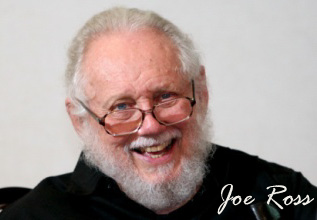
Joe Ross' books are actually full-blown courses for traders. Each of them is designed to deal with a different aspect of trading. The books teach you how to trade the reality of the markets.
You're looking right over Joe Ross' shoulder at real trades made in real markets. You are shown his reasoning for entering and exiting his trades.
To learn more about each book please scroll down.

We get letters and calls all the time telling us that our courses have helped people trade profitably and we offer a 30-day no-questions-asked, money-back guarantee on every book. (Read our Refund Policy)
![]() |
Day Trading
|
Price $ 150 |

Trading is a Business
If you've ever wanted to read a life-changing book for traders, you have come to the right place. Trading Is a Business (for futures traders) has had a profound effect on the lives of many aspiring as well as many professional commodities and futures traders. Trading Is a Business teaches you how to conduct your trading as a professional manager of your trading business. Proper management is vital to successful trading. This book points out the fallacies that many traders hold so dear.
In this manual, Joe Ross explores the details of business management, risk management, money management, trade management, and personal management. He shows you the psychological strengths and weaknesses that cause you to overtrade, under-trade, fail to "pull the trigger," or stay in too long while you sit there and watch your profits turn into losses. You are introduced to concepts and methods that few have ever considered when entering the world of futures trading.
This is the book that shows you what to do once you are in a trade. Joe says, "Anyone can get into a trade. The problem is how do you get out of a trade without losing?" If you want to know, this is the book that demonstrates how to do it.
Trading Is a Business is the book in which Joe first revealed the concept of matching congestions, the almost magical chart patterns that get you into a trade before most other traders even know what is happening.
Trading Is a Business also shows you Joe's two favorite management tools, "The Life Index" and "Equity Charting." He credits these two tools with his ability to master self-discipline as a trader.
If you choose trading for a living as your desired career, then it is vital that you read this book. Joe says, "Trading Is a Business is the single most important book of all the books I've written."
Price $ 150 |
(Available in Hard Copy Only)

Trading the Ross Hook
The concepts shown in Trading the Ross Hook are applicable in any market, and can be used for daytrading or position trading.
You learn exactly what Ross hooks are. You see their origins and what causes them to occur. You are shown step-by-step how to identify them, and how to filter them so that you trade only the best hooks. You see how to manage Ross Hook trades, how to manage risk, and how to manage your money when you trade these very lucrative market formations.
You are shown, chapter after chapter, and example after example, how Joe Ross' students are successfully trading Ross hooks using simple studies that can be found in most trading software packages. Then you see how he personally trades hooks, using chart reading, without technical indicators or technical analysis of any kind. This hardbound manual contains 24 chapters and is profusely illustrated with over 200 graphic examples. This book has become a classic in the field of commodity trading.
Price $ 175 |
(Available in Hard Copy Only)

Trading by the Book
Trading by the Book (for futures traders) contains 376 pages of explicit information about commodity futures trading. Included are discussions of how and when to use Fibonacci techniques, how to recognize congestion, how to set and trail stops, how to get in step with a market, how to select trades, and how to conduct your trading as a business. It is in this book that master trader Joe Ross first revealed his trading envelope. He reveals exactly how to define a trading range, as well as how to trade the breakout of a trading range.
Trading by the Book is loaded with commodity futures charts. Written at a time when technical analysis was all the rage, this book teaches you how to see the reality of the markets through the use of indicators in harmonious time frames. In it you will see an entire year's trading of a portfolio of seven commodities. Illustrations and examples of every single concept are shown, in an easy to read, easy to understand format.
This was the first trading manual Joe Ross wrote. It contains a mountain of trading wisdom based on more than four decades of experience in trading commodity futures.
Price $ 150 |
(Available in Hard Copy Only)

Trading Spreads and Seasonals
To learn more about
spread trading, please visit:
http://spread-trading.com
In Trading Spreads and Seasonals (for futures traders), Joe Ross shows you that you don't have to be afraid of the "speculative nature" of futures. This book helps you structure "winning" trades the same ways the pros do. If theory and technical formulas are what you want from a "How-to-Win" trading course, then this book is not for you. Instead, Joe brings you down-to-earth with his vast knowledge of one of the most fundamental ways anyone can ever learn to trade. "This is the way the old-timers did it, and it is a way that still works. Spread and seasonal trading are almost a lost art these days, and you have to wonder why! If you are a position trader, what better signal can you have than that this is the time of the year when the bonds have gone up 15 times in the last 15 years?" says Joe.
Trading Spreads and Seasonals deals with reality trading and presents you with dozens of easy to follow charts and graphs, and examples of real-life trades that will refine your trading skills. It contains a review of the basic tenets of seasonal trading, seasonal spreads, and outright seasonal futures trades. Because nowadays so few know that trading spreads and trading seasonally are basic to trading commodities, this book contains a listing of other references that will make you a better trader. As with all of Joe's books, there is much, much more content than we are able to describe here. The book contains well over 300 pages. You might want to read what Joe himself wrote about the reasons for writing this book. The text for that is contained in the following paragraphs:
Spread trading is virtually a lost art except among professionals, who, by the way, have never stopped using them since the beginning of trading.
Spreading was one of the ways I learned to trade, and knowing how to use spreads saved my trading life numerous times. There are a number of good reasons to trade spreads:
1. Very low margin requirements.
2. Much better odds of being successful than with futures
or options.
3. Every spread trade has you hedged. You give up the
risk of price movement and replace it with the smaller
risk of the differential in the spread.
4. You are immune to stop running because you are in
two different related markets or two different months
of the same market.
5. Spreads take away much of the volatility of most
futures trades.
6. If you are only half right about the spread, you
can drop the losing side and keep the winning side.
7. You have the benefit of the fact that most seasonal
spreads have very high percentages of being correct.
Much more so than outright seasonal futures trades.
So why don't more people trade them? Because the industry has kept the public largely ignorant of spread trading. How many books have you seen out there that deal with trading spreads? Yet trading them is simple. You buy one contract and sell a different contract at the same time via a spread order, or you leg into each contract on your own, as two separate transactions. If you enter a spread by legging in, the computer will pick up the fact that you are in a spread and will hold you to only spread margins. Either way, you will pay two commissions, but the commissions are not a major factor considering that you will put up only fractional margins. Margins on spreads run about 1/5th to 1/4th those of outright futures trades. As I write this, a trade in Soybeans today will run you $1,350 per contract. But for a Soybean spread you will put up only $270, or 20% of the margin needed for an outright futures trade. Yet every point in the spread will be worth exactly the same as every point in the futures ($50). This means that the return on margin for a soybean spread is five times that of an outright soybean futures trade. Are you beginning to get the message??
It is for this reason that I wrote the book Trading Spreads and Seasonals. The whole story is in the book. I encourage every one of my students and subscribers to read it. Spread trading is probably the best way to trade that I've ever encountered. It beats the socks off both options and outright futures trades. It is far more relaxed than day trading. Much of the stress of trading is removed with spread trading.
I mentioned that the professionals all still spread. Let me give you an example:
Let's say that in June you decide to buy a July Corn futures and that Corn is moving up sharply due to a lack of rain in the corn belt. You submit your order to the trading floor. Since all of a sudden everyone is hot to buy Corn, the floor broker has trouble filling your order to buy. Although there is no requirement for a floor broker to sell to you (to make a market), he sells to you because he feels that it is his role to act in the capacity of a market maker. What do you think is the first thing that floor broker is going to do once he sells to you? He is going to spread off on a back month of corn, or the same month in wheat or beans. He will hedge (spread) his position until he sees an opportunity to unload that short corn contract in a profitable (to himself) situation.
Years ago, when the Value Line contract was virtually dead because no one was trading it, there were always two floor traders in the Value Line pit. That's all, just two. No one else. These gentlemen were always trying to make a market in the Value Line because they owned Value Line seats, and if no one traded the Value Line, their seats would become worthless.
Every once in awhile, the phone would ring and a Value Line trade would come in. The two of them would march out onto the trading floor and cry out the details of the trade, because the rules say the trade has to go to open outcry. It used to crack me up. It was really funny watching those two yelling at each other to accomplish the trade.
What do you think they did as soon as the transaction was completed? You may have guessed. The one who took the wrong side of the trade made a beeline for the telephone to offset his position in the S&P 500. In other words, he spread the risk against the S&P. Today he would spread off on the Nasdaq futures, but at the time the Nasdaq futures did not exist.
Apart from the profits made by an exchange, the markets exist for the benefit of hedgers. All hedgers are spreaders. They are long the underlying and short the futures, or vice-versa.
Shouldn't you be a hedger as well? You can do it by learning how to trade spreads.
Price $ 150 |
(Available in Hard Copy Only)
Trading Spreads and Seasonals was revised in May 2006:
To those who already own a copy of Trading Spreads and Seasonals.
If you want to know the differences the old TSS and this latest printing, here are your answers:
No one who has the old version of Trading Spreads and Seasonals needs to buy the new one.
The changes that were made are:
-
Cosmetic
-
Removal of some obsolete information:
> Put and Call Open Interest
> Tables from MRCI
> Outdated resources -
Updating a few lists to reflect new markets, such as the Russell 2000 mini
-
A few paragraphs concerning additional benefits of trading spreads
-
1.5 pages about entry-exit problems
-
There are a couple of new charts, but they illustrate the same things as before
No changes were made to the Trading Seasonals part of the book.
JR

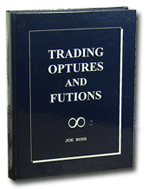
Trading Optures and Futions
Trading Optures and Futions (for futures and options traders) is a complete course on how to put money in your pocket trading with combinations of futures and options. More than that, it's the trading course you've been hoping for. It gives you explicit, detailed information about an exciting and novel way to win in trading
In this fascinating course, Joe Ross reveals the innermost secrets of the options traders and how to use that knowledge, along with the best of futures trading, to create your own profitable way to trade. He teaches you step-by-step how to win.
You will learn who the real competition is in the options and futures markets, and why they don't want you to know the truth about options. You will know what your broker won't tell you, and what he can't tell you.
Joe shows you how to combine futures with options into a unique, virtually niche way to trade. This is a book about how to have the best of both worlds - options and futures. It is in this book that Joe first revealed explicit information on how to spot congestion before anyone else sees it. This is not just a book on how to trade options. It is a book for futures traders who have no idea of the power that can be added to their trading by combining options with futures. Of course, option traders can learn many significant things here as well. This manual contains over 500 pages of dynamic trading information.
Price $ 195 |
(Available in Hard Copy Only)
Trading by the Minute
Please
note: Trading by the Minute was revised in 01/2005.
The new version of this manual is called "Day
Trading"
Trading by the Minute (for futures traders) is one of the most popular books on intraday trading ever written. It has become a legend in its time. This is a book that is a "must read" for online daytrading. In Trading by the Minute, Joe Ross reveals his major, minor, and intermediate intraday trading signals. He shows you exactly what they are, and explains why they are important. He emphasizes the how, why, and when of stop loss and profit protecting stop placement.
You will learn about hedging your positions, how to deal with floor traders, and your advantages over them. Joe reveals several methods for identifying a trend before anyone else sees that it is happening. He calls it "identifying a trend while it is still in the birth canal." If you are an online electronic daytrader, you will refer to this book time and time again. Daytrading the stock indices, and online trading of the E-mini S&P 500 stock index are Joe's specialties. He has taught thousands how to daytrade. Learn his tricks and inside information from this book, which contains well over 400 pages.
Please
note: Trading by the Minute was revised in 01/2005.
The new version of this manual is called "Day
Trading"
| Table of Contents | OUT
OF PRINT |
Trading
Order Power Strategies
(Tapes and Book)
Trading Order Power Strategies (for futures traders) is an interactive course that shows you, in step-by-step detail, how to make sure your called-in orders are almost always executed in your favor. This breakthrough program, the first of its kind anywhere, has been hailed by brokers, educators, and traders alike as "the missing link" in trader education. When you learn what's included in the program, you'll know why. Trading Order Power Strategies includes a special insert for fully electronic trading, as well as electronic order routing.
The Trading Order Power Strategies program uses a dynamic learning technology, combining audio tapes and written materials in a way that greatly shortens your learning curve. The program includes four one-hour audio tapes, a 12-chapter Study Guide, and the Electronic Trading booklet mentioned above - all professionally produced to help you learn as much as possible in the least amount of time.
"I listen to
these tapes over and over again while I'm driving to
work, or to the store. I can't believe there is so much
to learn about placing orders. This is truly powerful
stuff."
Max Baruchin, New Jersey
Special Price $ 75
Available Shipping Rates & Times - national and international, click here